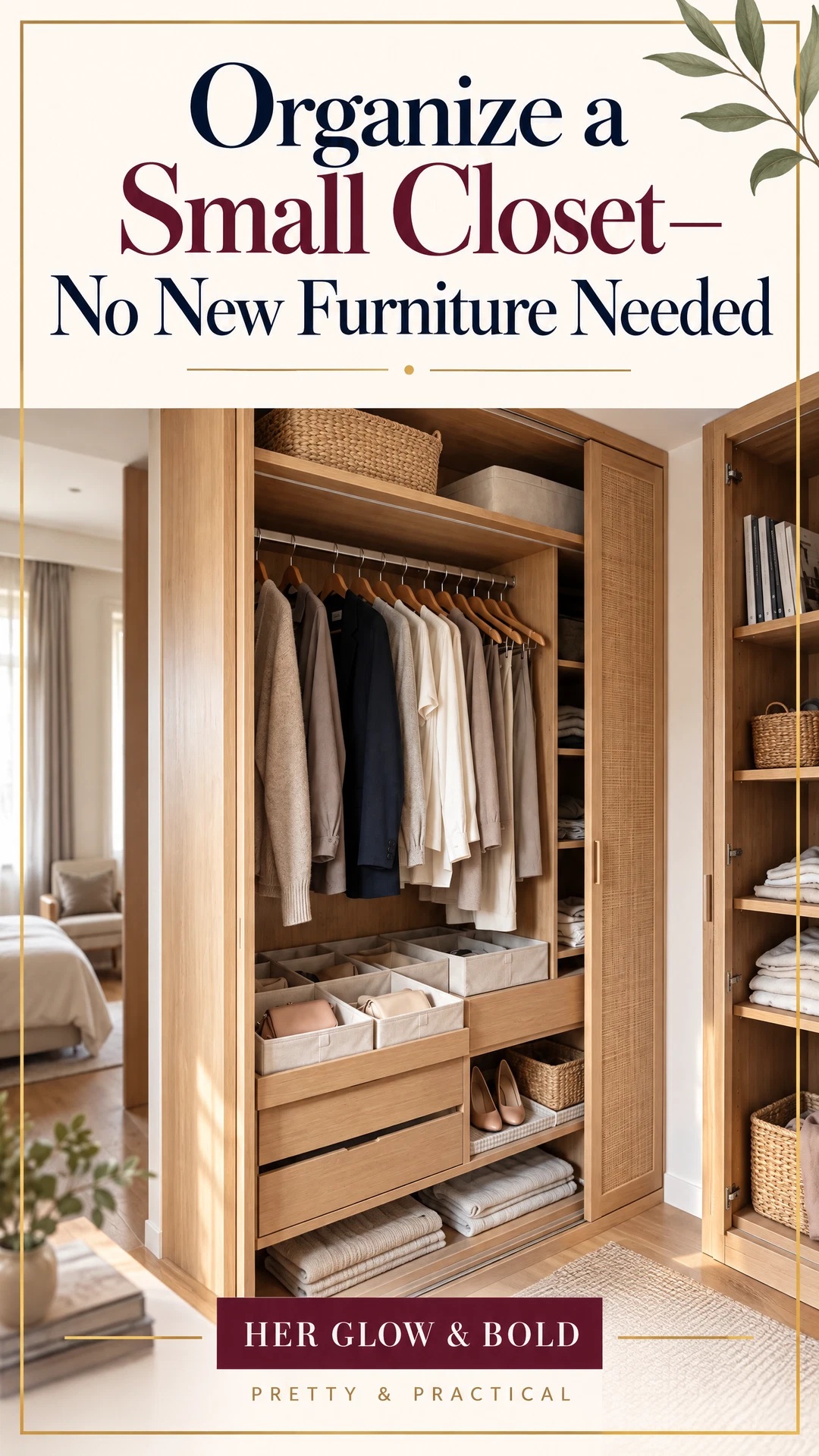
A small closet can feel crowded even when you own an ordinary amount of clothing. The fix does not have to involve a new wardrobe, a pricey organizer, or a perfect capsule collection. Start by measuring, making a little breathing room, and giving each category a clear home. This plan works with the closet you already have—and with boxes or pillowcases you may already own.
1. Measure the closet before you rearrange it
Take everything off the floor and note the usable width, height, and depth. Many standard reach-in closets are roughly 12 to 14 inches deep, but doors, trim, and built-in rails can change what actually fits. Measure your own space instead of relying on a typical dimension. Check the distance from the back wall to the inside of the closed door, too: a hanger that fits on an open closet may bump the door when it shuts.
A CONSIDERED FIND
A practical pick to consider
Product links on this page are affiliate links. If you buy through them, Her Glow & Bold may earn a small commission at no extra cost to you. Prices change often — check today’s price on AliExpress.
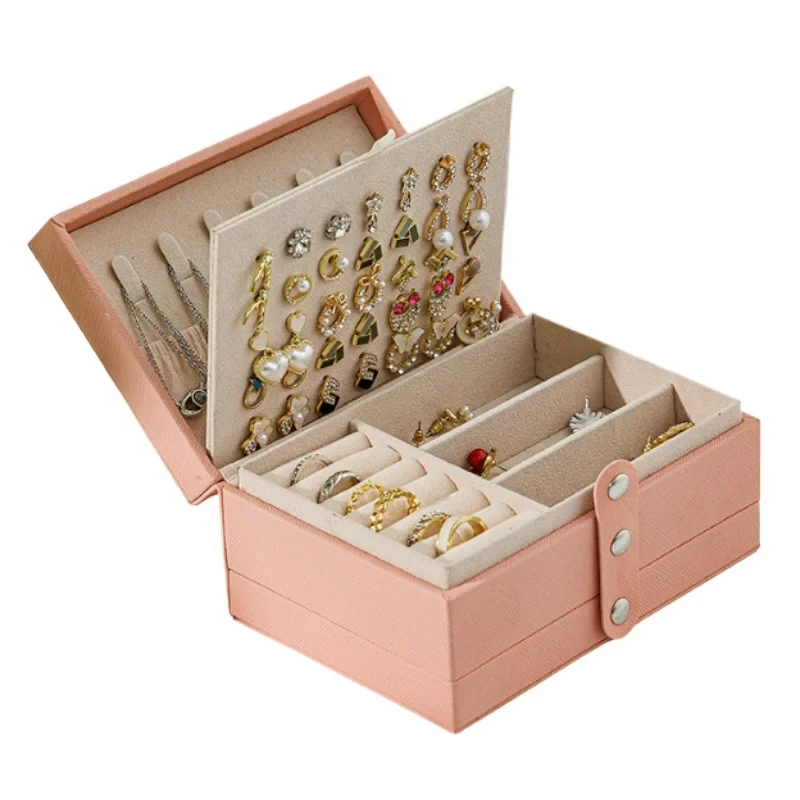
3-Layer Jewelry Storage Box
A three-layer jewelry box with a snap closure — room for necklaces, rings, earrings and bracelets, in a tidy case that travels well.
Shop on AliExpress →Look at the existing rod and shelves. Measure shelf depth; around 10 to 12 inches is common, but the real depth matters more than the rule of thumb. Note the height from the floor to the rod, and the distance between the rod and any shelf above it. If you rent, avoid drilling or removing fixtures unless your agreement allows it. A quick sketch with measurements can prevent a stack of folded clothes from ending up too deep or a storage box from blocking the door.
2. Empty the space and edit without judgment
Take items out in manageable groups—one shelf, one rail, or one category at a time. Make simple piles for keep, relocate, repair, and let go. Ask whether an item fits comfortably, whether you reach for it in your real life, and whether it needs a repair you are willing to make. There is no need to judge what you bought, your body, or how quickly you make decisions. If an item is sentimental or you feel uncertain, set it aside for a later pass rather than forcing an answer.
Move clothes that belong elsewhere to their proper home, and gather stray hangers, bags, and accessories. Put donations in a bag only if you are ready to pass them along, and check local donation guidelines. A more detailed, gentle approach to deciding what stays is in our The Weekly Cleaning Schedule That Actually Works. The aim is not to reach a particular number of garments; it is to make the things you use easier to see and retrieve.
3. Give hanging clothes a little breathing room
Group garments in a way that suits your routine: by type, by work and casual use, or by color if that helps you find things. Leave about 1 to 2 inches of lateral space around hangers where possible. That is a useful target, not a strict requirement; the key is being able to slide pieces along the rod without snagging sleeves. If the rail is packed, review what is rarely worn, move off-season items out of the prime area, or fold suitable pieces instead.
Using slim hangers of a consistent width can reduce visual clutter and make the rail easier to scan. Before changing every hanger, check the closet depth and the door clearance. Keep structured jackets and delicate pieces on hangers that support their shape; not every garment should be squeezed onto the thinnest option. Put frequently worn clothes at an easy-to-reach height and leave a small open section for laundry-day transitions or an outfit in progress.
4. Use vertical space, not just the floor
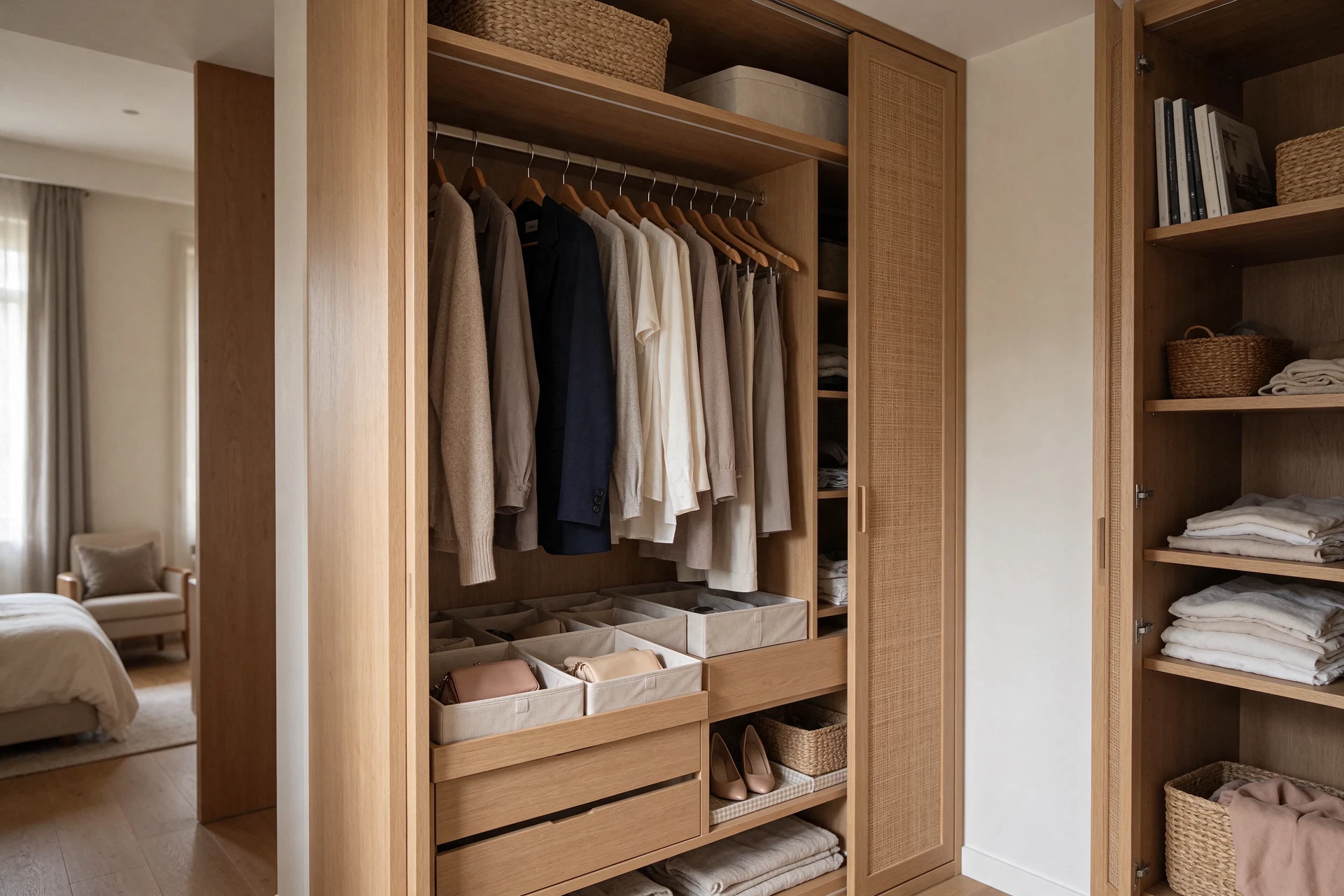
Look above the main hanging rail and below shorter garments. If there is a second built-in rail, use it for shirts, skirts, or other shorter items while keeping long dresses and coats on the full-height section. If the closet has one rod, a shelf above it, and clear floor space, make each zone work before adding anything. A small box on an existing shelf can contain accessories; a sturdy, clean box under hanging shirts can corral folded items if it does not obstruct the door or become a trip hazard.
Stack folded clothes in short, stable piles so you can lift one item without toppling the rest. Where drawers are already available, use them for smaller garments and accessories, grouping similar pieces so the drawer does not become a catchall. If you do not have drawers, shallow repurposed boxes can act as open bins on a shelf. Label the front with a paper tag if helpful. Save a few practical ideas for other tight areas in our The Weekly Cleaning Schedule That Actually Works.
5. Make shoes and small items easy to find
Keep shoes you wear often on the closet floor, paired and pointed in the same direction. Place them in a single row if the available depth allows, or store occasional pairs in a shoebox with a simple label. Before stacking boxes, check that you can still reach the back row and that nothing presses against the door. If the floor is narrow, relocate special-occasion or weather-specific pairs to a suitable nearby shelf or under-bed space you already use.
Belts, scarves, and small bags can be grouped in a repurposed box, a clean pillowcase, or an existing basket. Pillowcases are especially useful for containing soft accessories or protecting a seasonal item from dust; they are not a substitute for a dry, clean storage space. Keep the container light enough to lift safely and make its contents visible or labeled. Avoid piling heavy objects high, where they could fall when you reach for something.
6. Rotate by season and maintain the reset
Move the current season’s most-used clothes to the easiest-to-reach part of the rail and shelf. Clean and fully dry items before storing them. Off-season pieces can go into an existing suitcase, lidded box, or clean pillowcase on a high shelf, provided the container fits and the location is dry. Leave a brief note or label so you remember what is inside. Keep a few versatile layers accessible if the weather changes or you travel between climates.
Once the closet is set up, try a short weekly reset: return items to their zones, pair shoes, and move laundry along. When something new comes in, decide where it belongs before putting it away. If a shelf becomes difficult to use, adjust the grouping rather than treating the mess as a personal failure. For more ideas that make everyday home routines feel lighter, browse our The Weekly Cleaning Schedule That Actually Works. A useful small closet is not a showroom. It is a space where you can find what you need, put it back, and get on with your day.