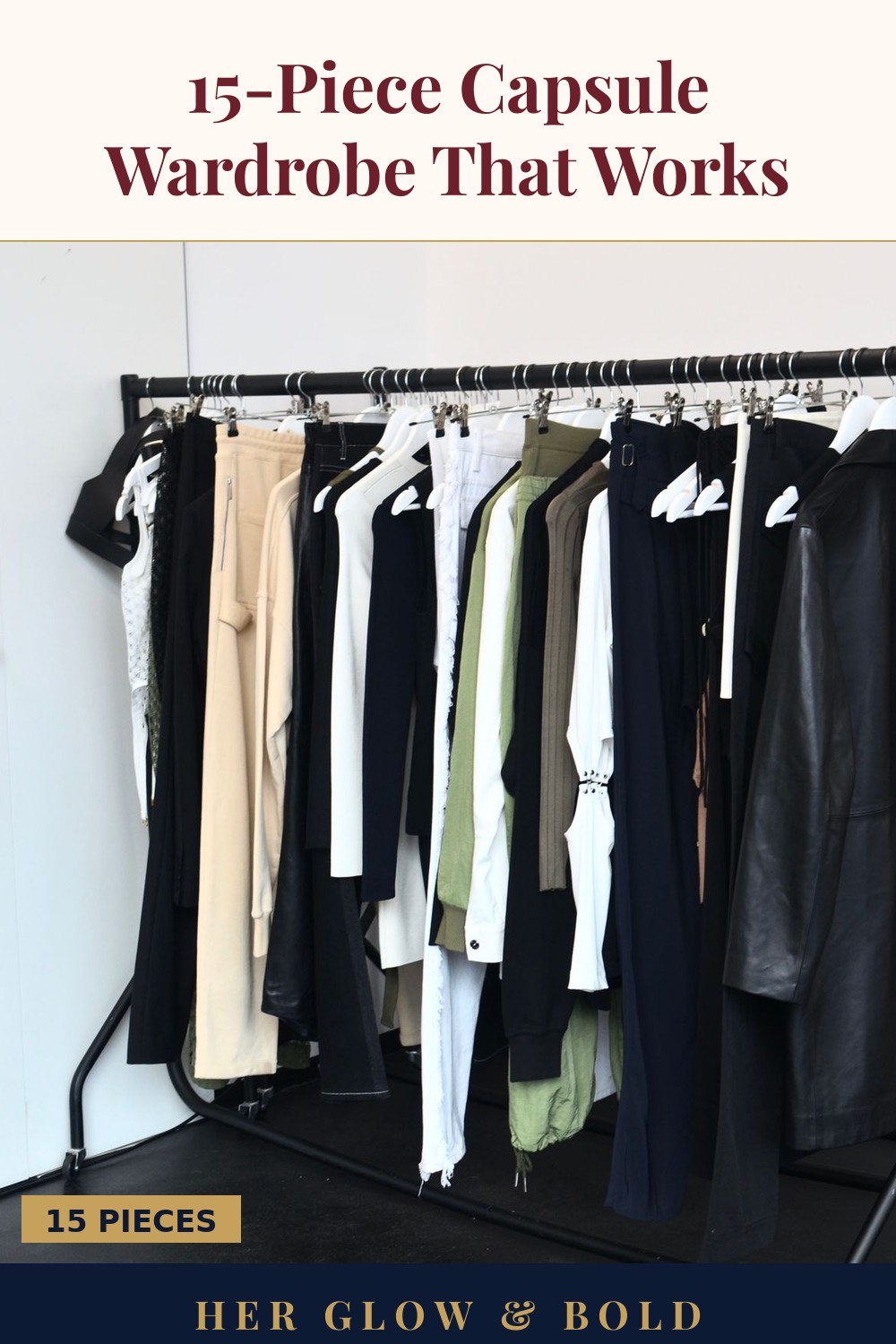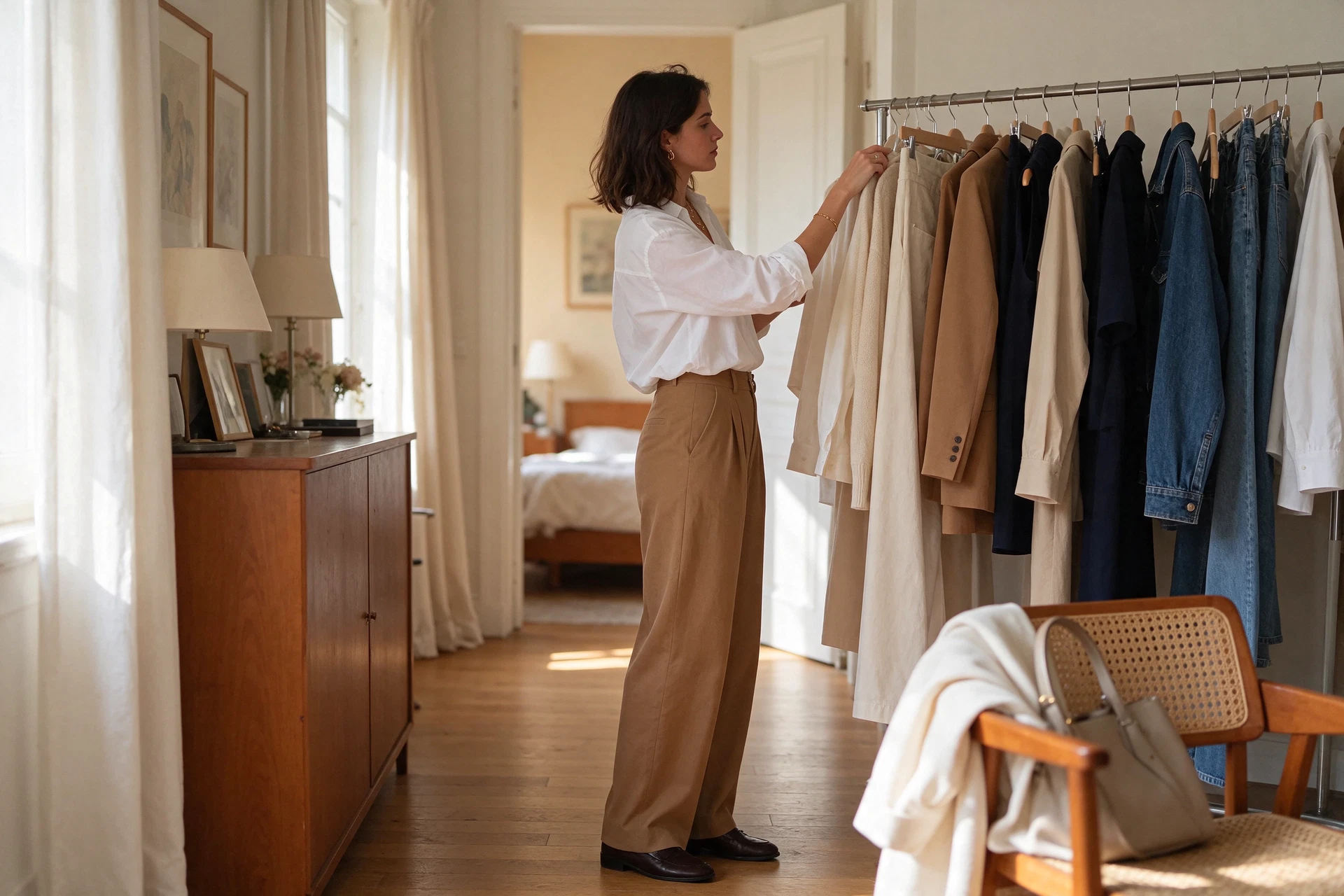
There’s a reason the phrase “capsule wardrobe” can sound both appealing and intimidating. The promise of getting dressed with less fuss is attractive; the idea that you must discard beloved clothes or follow a minimalist rulebook is not. At Glow & Bold, we treat a capsule as a flexible small wardrobe: a collection of useful, compatible pieces that makes your own style easier to reach for. Fifteen is a starting framework, not a limit. Keep what you wear, adapt what you need, and let the list serve your life rather than the other way around.
Build a palette that feels like you
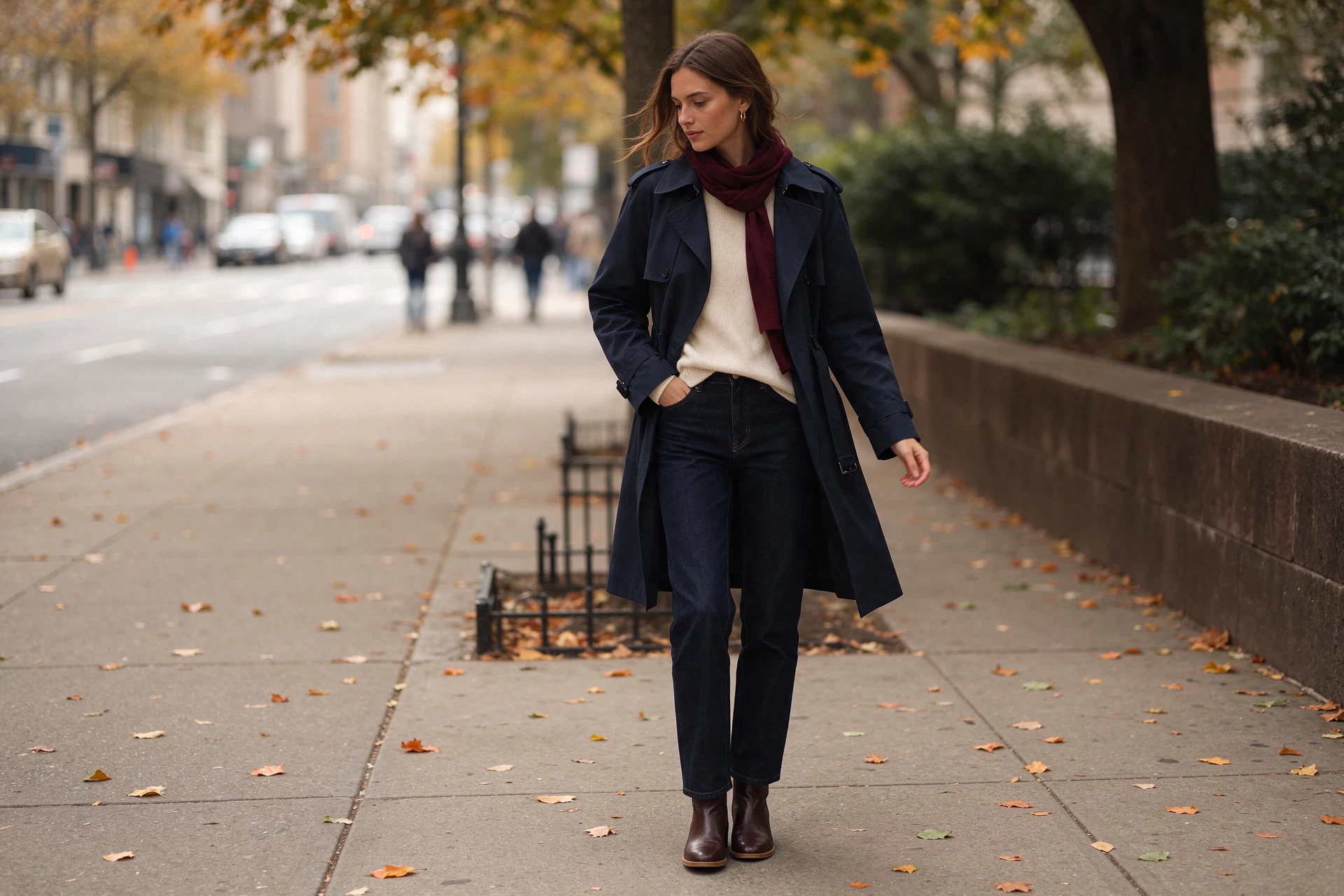
For this version, use navy, cream, and denim as the core colors. They mix naturally, and each can be warm, cool, pale, or deep depending on what suits you. If you want an accent, add burgundy in a scarf, knit, or top; it gives the quiet base a little richness without asking every piece to match. You can substitute another favorite accent, too. Before shopping, look at the colors already in your closet and choose shades that make existing favorites easier to wear.
The 15-piece starter capsule
- White T-shirt.
- Striped T-shirt.
- Cream blouse.
- White button-up shirt.
- Navy blazer.
- Cardigan.
- Neutral knit sweater.
- Straight-leg dark denim.
- Light-wash denim.
- Tailored trousers.
- Midi skirt.
- Simple day dress.
- Trench coat.
- Denim jacket.
- A footwear slot: choose white sneakers, loafers, or boots according to your routine.
That last slot is deliberately a choice, not a command to buy all three. If you already own more than one useful pair, count footwear separately or swap a category for something you need more. For a commute that involves a lot of walking, comfortable sneakers may earn their place; loafers might suit a polished office; boots can be the practical pick for colder or wetter months. A capsule should reflect actual use, not an imaginary perfectly coordinated life.
Eight outfits to make the idea tangible
These combinations are prompts, not rules. Adjust proportions, tuck or untuck, add a belt or jewelry you already own, and choose footwear that feels comfortable.
- White T-shirt, dark denim, and the denim jacket.
- Striped T-shirt, tailored trousers, and the navy blazer.
- Cream blouse, midi skirt, and loafers or boots.
- White button-up, light denim, and white sneakers.
- Neutral knit, dark denim, and the trench coat.
- Day dress, cardigan, and sneakers; add the trench when the weather calls for it.
- White T-shirt under the blazer, with the midi skirt and your chosen shoes.
- Striped T-shirt with light denim and the trench, or swap in the denim jacket for a more casual layer.
There are more combinations hiding in these pieces: the white button-up can be worn open over a tee, the cardigan can layer over a blouse, and a knit can sit over the shoulders or under a coat. Think in layers and contrasts—structured with relaxed, light with dark—rather than trying to make every outfit look identical.
Shop thoughtfully, at your own pace
First, take a closet inventory. Note the pieces you reach for, the ones that need repair, and the gaps that repeatedly make getting dressed harder. Make a short list before browsing so that a sale or a beautiful display doesn’t turn into an impulse purchase. Buying nothing is a valid outcome of this exercise.
Set a comfortable spending range for each item, compare fabric and construction details, and consider secondhand shops, resale platforms, clothing swaps, or borrowing for occasional needs. Check measurements and return terms when buying online, and inspect pre-owned items for stains, missing buttons, stretched seams, and care requirements. Affordable does not have to mean disposable, and a higher price alone does not guarantee a better fit or longer life.
Cost-per-wear can be a useful reflection tool: divide the price by the number of times you realistically expect to wear the piece. It is an estimate, not a promise of savings or a reason to stretch your budget. A modestly priced item you enjoy and use often may make more sense for you than an expensive “investment” piece that stays on its hanger. For related ideas, see 10 Fall Outfit Formulas That Always Look Put Together and 10 Fall Outfit Formulas That Always Look Put Together.
Common capsule mistakes to sidestep
- Copying someone else’s list. A skirt or blazer is not essential if it does not fit your lifestyle; a work uniform, sensory preference, climate, or mobility need may change the mix.
- Replacing everything at once. Try the framework with what you own. Replace worn-out essentials only when you are ready and have identified a real gap.
- Choosing a palette that feels like a costume. Neutrals are helpful, but your capsule can include prints, color, and pieces with personality. Compatibility matters more than strict sameness.
- Ignoring fit and comfort. A theoretically versatile garment is not versatile for you if you avoid wearing it. Consider movement, layers, and the care it requires.
- Assuming fewer items must mean a fixed number. Your useful wardrobe can grow or shrink as your work, weather, and routines change.
Care and seasonal adaptation
Care labels are the best starting point. Wash items as directed, treat stains promptly according to fabric guidance, and avoid over-washing when airing or spot-cleaning is appropriate. Close zippers, separate colors when needed, and let knits dry flat if their labels recommend it. Mend a loose button or small seam before it becomes a bigger annoyance. Store clean off-season pieces in a dry place, and make sure coats and shoes are fully dry before putting them away.
When the season changes, rotate rather than rebuild. In colder weather, layer the tee or blouse beneath the knit and blazer, then add the trench; in warmer months, let the day dress, skirt, and lighter shirts do more of the work. If rain, heat, or snow is common where you live, practical outerwear and suitable shoes may deserve space before another “classic” item. Revisit the list every few months: what did you wear, what felt awkward, and what was missing? The best capsule is not a perfect set of 15 pieces. It is a thoughtful, evolving wardrobe that makes getting dressed feel more like you.